Numan.
Improving retention by giving users more control.
The Challenge: Patients had no way to manage their subscription without contacting Customer Care. Limited self-service left patients frustrated and support teams overwhelmed.
The Strategy: Reframe a support reduction brief into a broader subscription management experience helping patients manage treatment on their own terms while supporting long-term retention.
The Result: 30% reduction in subscription-related Customer Care calls, 15% of patients choosing to modify rather than cancel, and an estimated £20k increase in monthly recurring revenue.
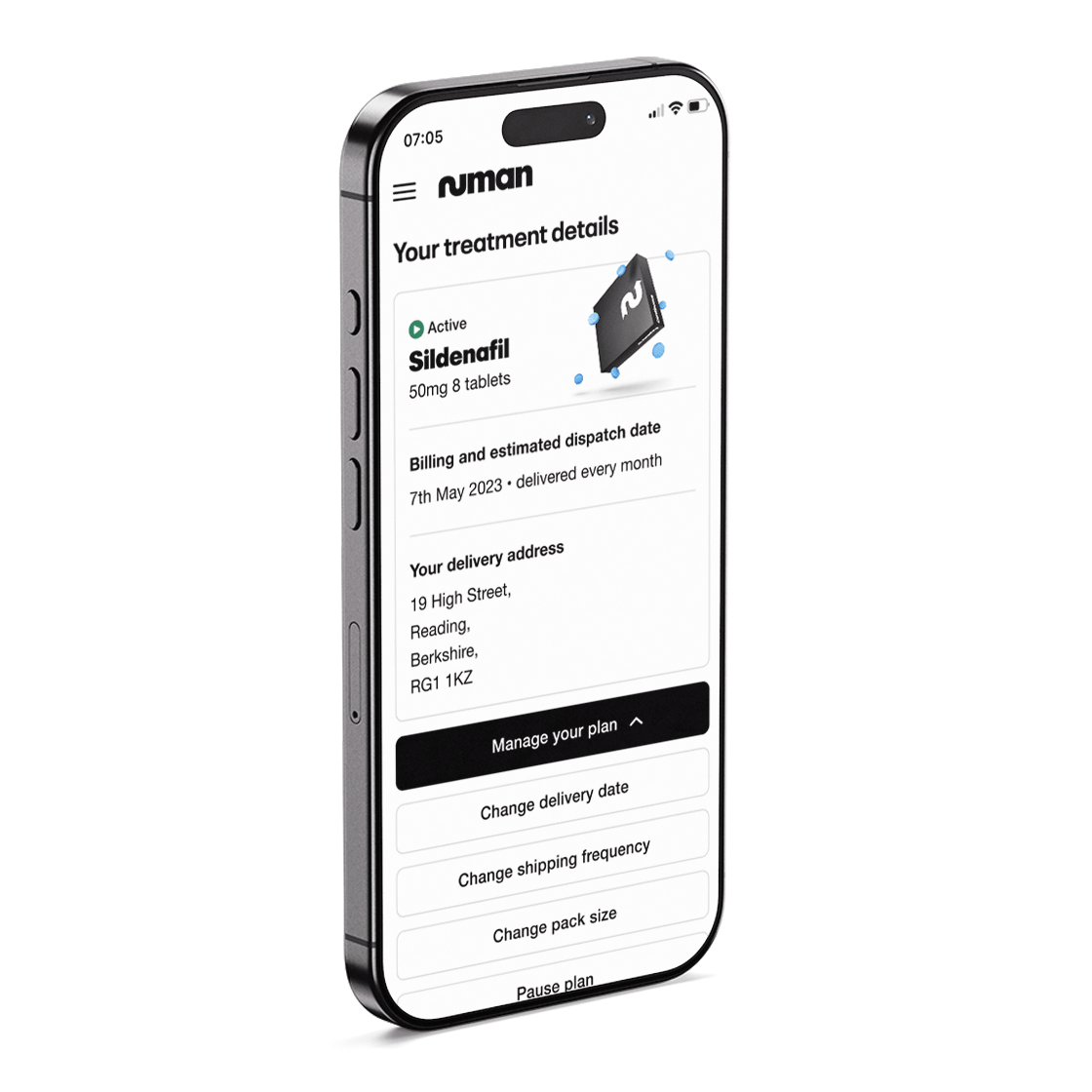
Overview.
Numan is a healthcare platform helping patients manage ongoing treatments across sexual health, hair loss and weight loss. Subscriptions sit at the heart of that experience, yet over time it became increasingly difficult for patients to understand and manage.
Patients struggled to make simple changes without contacting Customer Care. Terminology such as “12 repeats” created confusion, upcoming charges often came as a (frustrating) surprise, and managing treatment frequently meant speaking to an advisor. Around 35% of support queries related to subscriptions, with cancellation requests accounting for the largest proportion, creating unnecessary operational cost and frustration for patients.
Working as the sole Product Designer alongside my Product Manager, engineers, Customer Care and clinical team, I helped reframe the project from reducing support demand to improving how patients managed ongoing treatment.
Discovery.
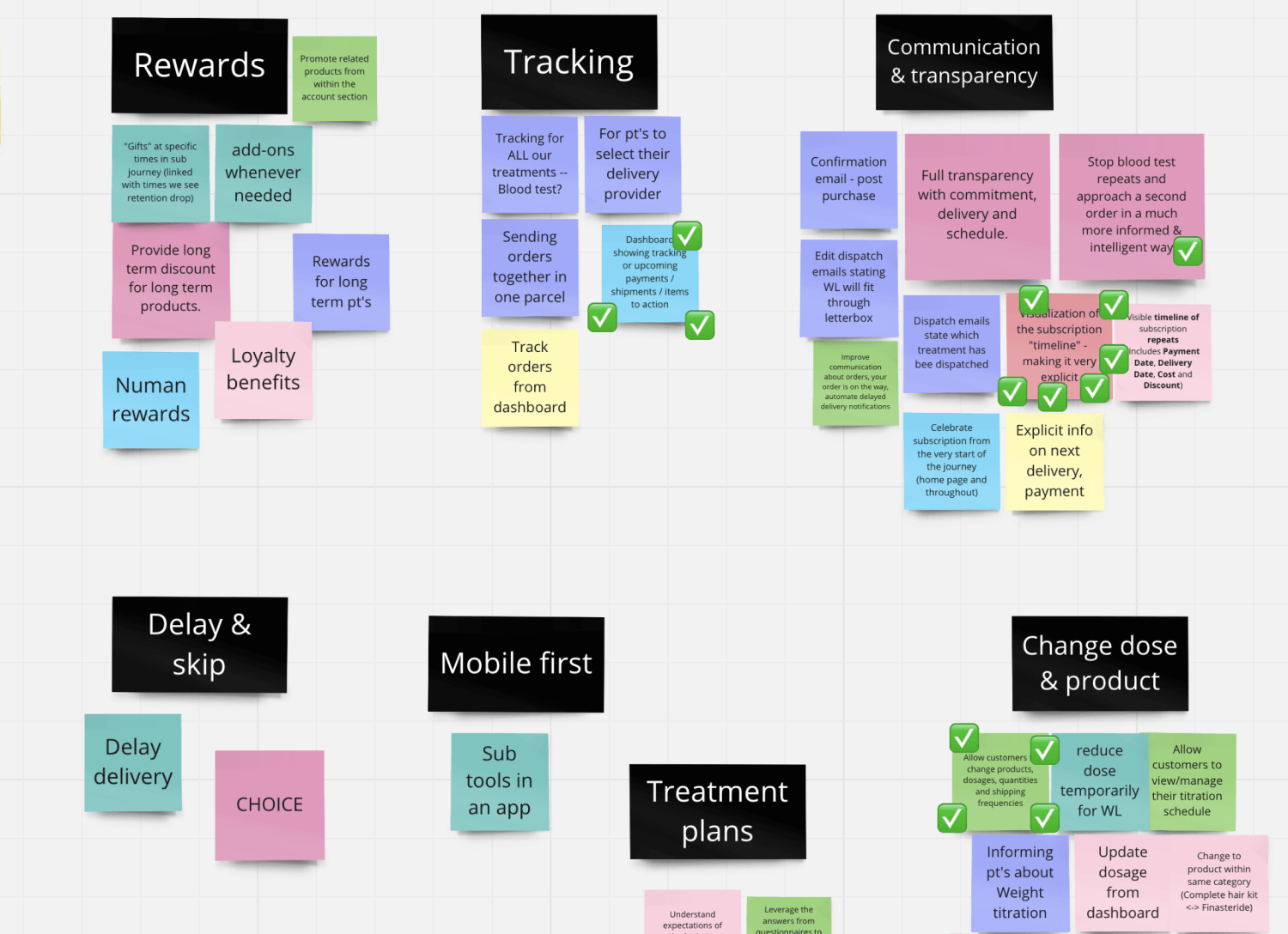
The initial brief focused primarily on reducing tickets for Customer Care contact. My Product Manager and I facilitated an opportunity-mapping workshop with stakeholders across Product, Customer Care and Clinical, capturing everything we knew to build a shared understanding of where friction existed across the subscription experience.
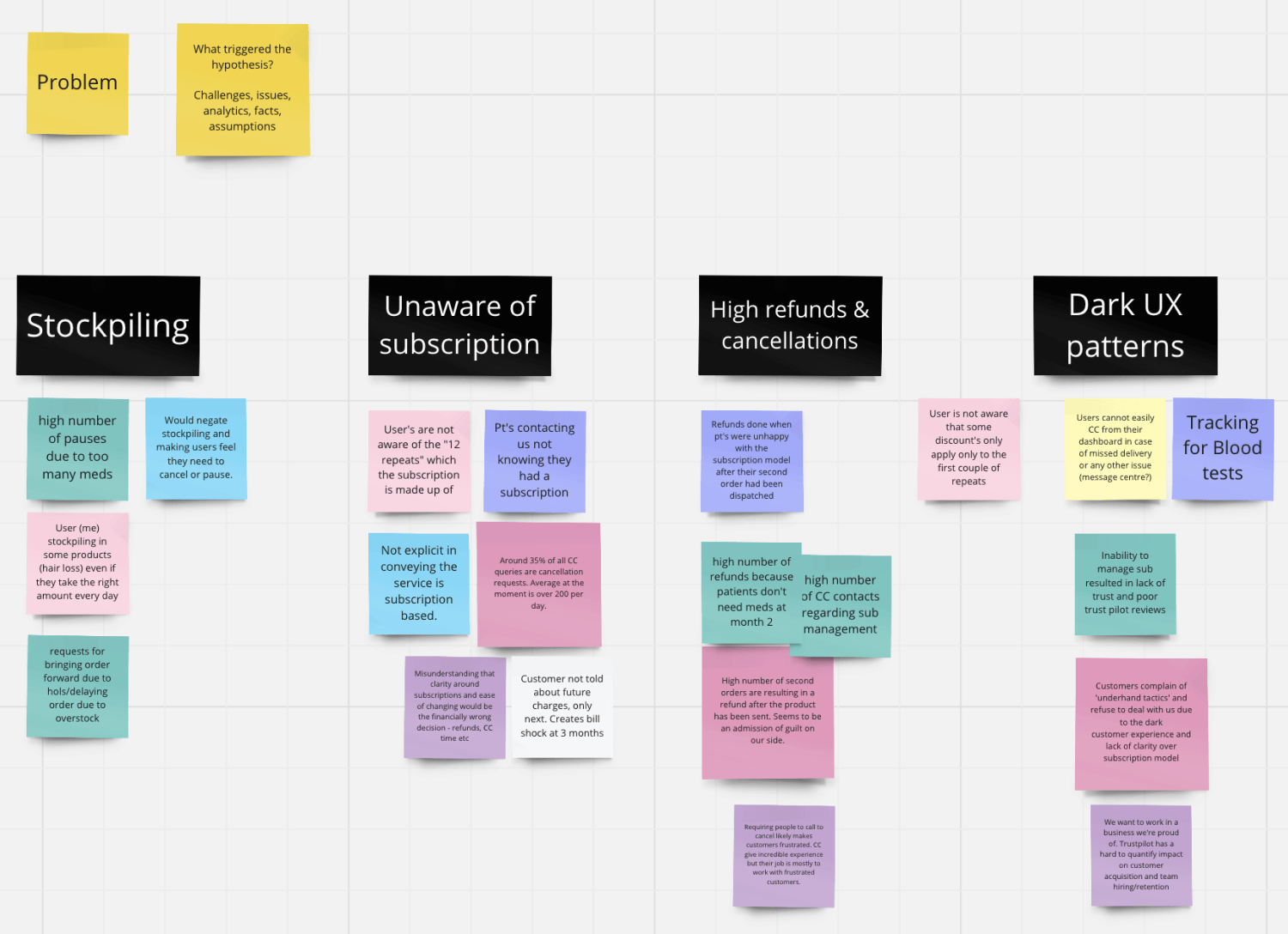
From our Customer Care insights, patients lacked visibility over future payments, struggled to understand the subscription model, and described the experience as unnecessarily difficult to manage, especially if they needed to make changes to their treatment plan. What initially appeared to be a cancellation problem was revealing itself as something much broader. We reframed the challenge which became the foundation going forward:
"How might we help patients manage their treatment to suit their needs, while building trust and supporting long-term retention?"
Research.
With a clearer problem statement, I worked with my PM to validate our hypotheses through a combination of quantitative and qualitative evidence.
Support data showed that cancellation requests were rarely driven by patients wanting to leave outright. Instead, they were attempting to solve practical problems the product wasn’t easily equipped to handle.
Many had accumulated more medication than they needed. Others hadn’t yet started treatment, were going on holiday, wanted to delay deliveries, or needed clinical guidance before continuing. Around 15–24% of pauses alone were caused by patients simply having excess medication. Existing retention initiatives were treating these as cancellation problems rather than service problems.
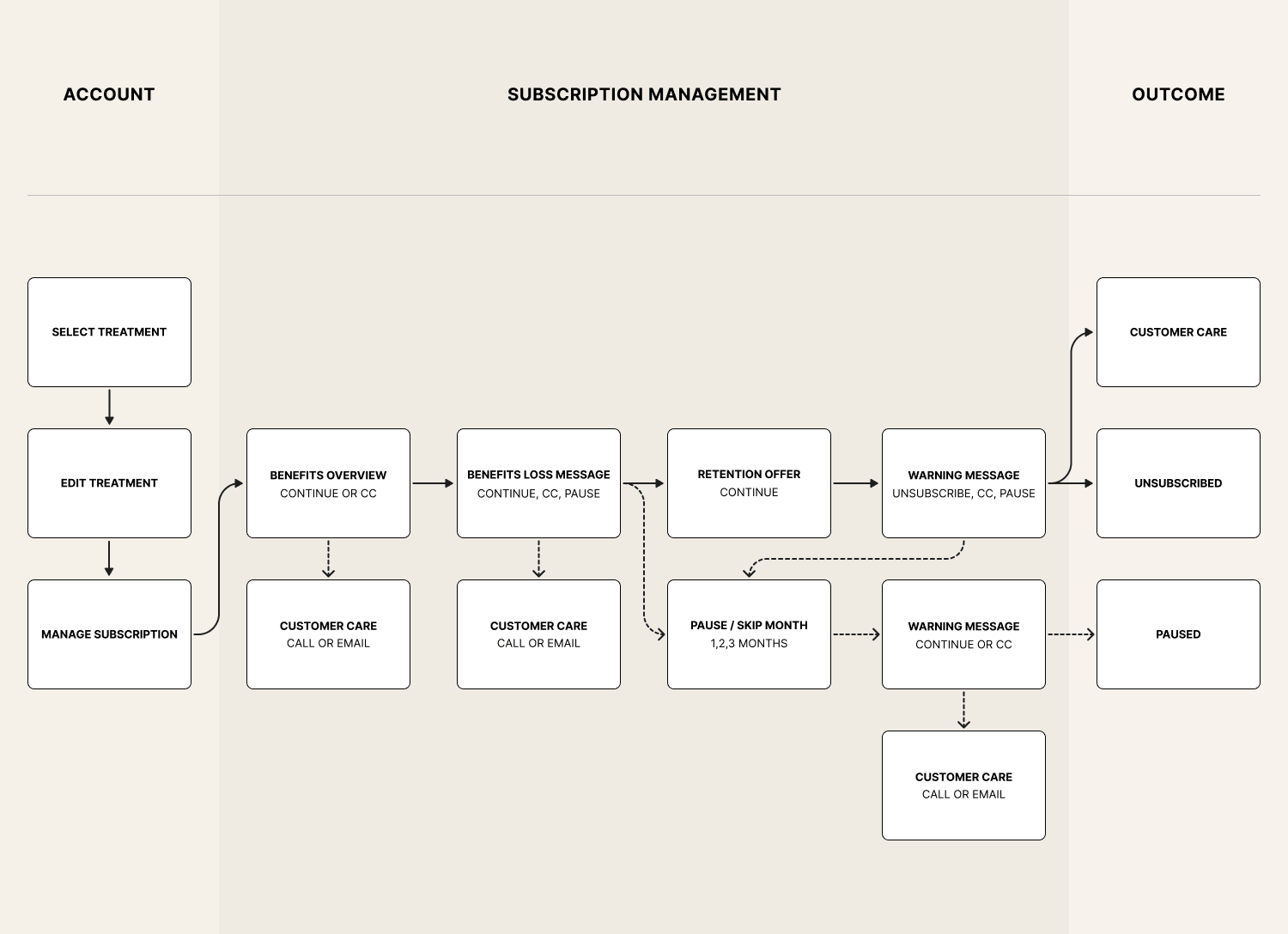
Alongside quantitative analysis, I interviewed several patients remotely, and spent time with Customer Care reviewing real conversations. This gave valuable context behind the numbers, revealing that patients were often frustrated before an advisor had even answered the phone.
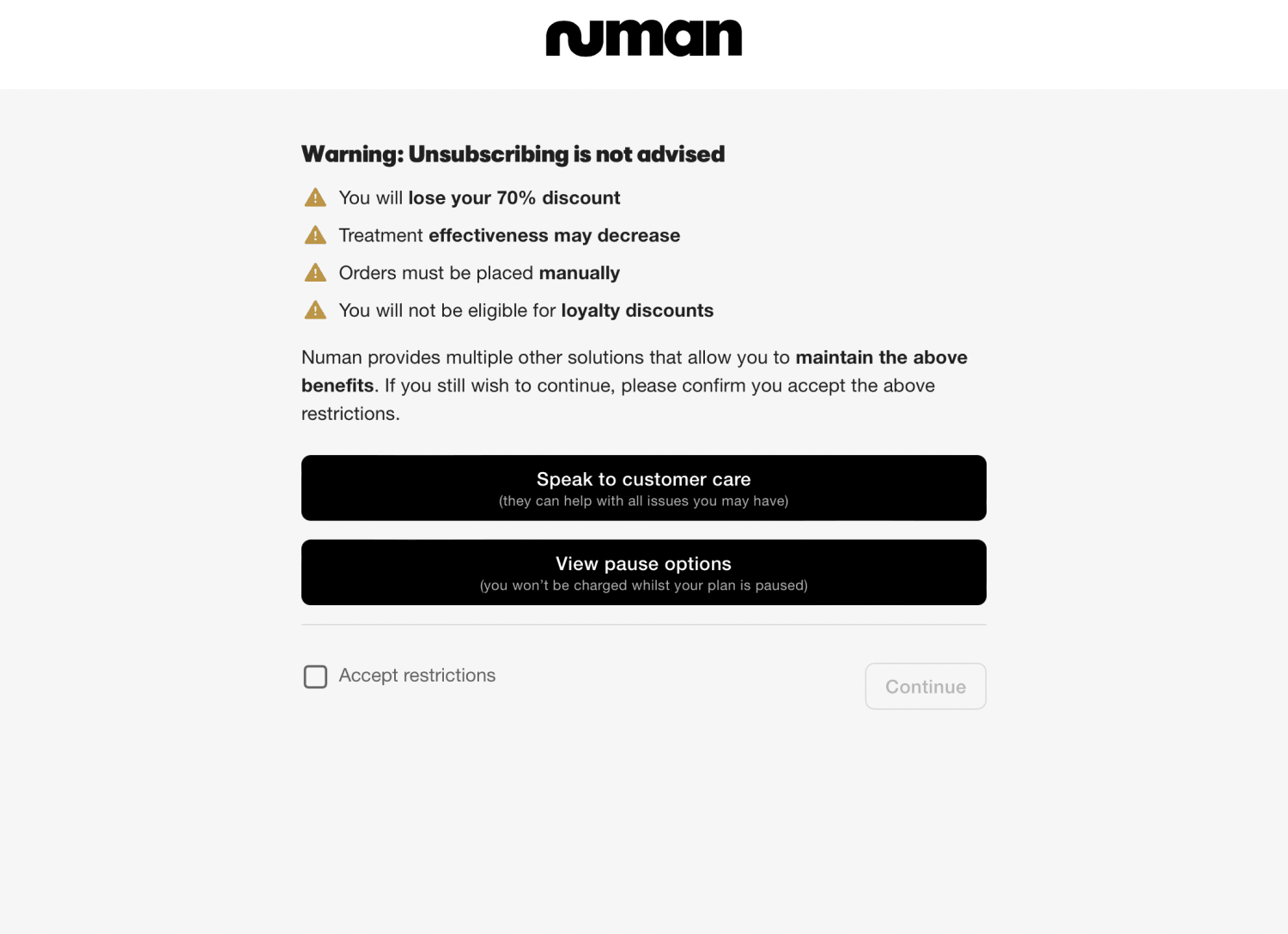
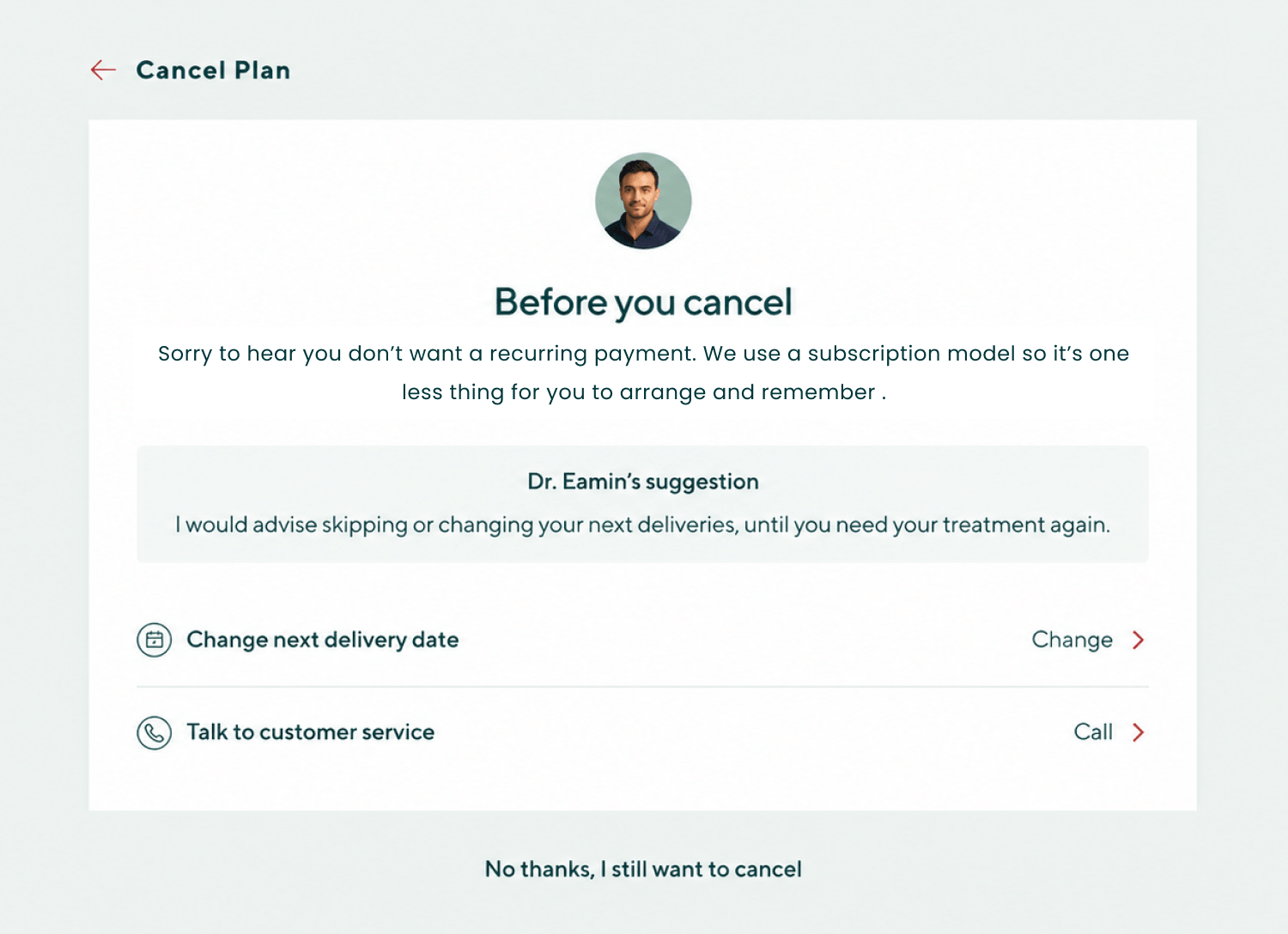
To broaden our perspective, I also reviewed how subscription businesses inside and outside healthcare approached ongoing account management. The strongest experiences treated subscription management as an ongoing relationship rather than a binary decision between staying or cancelling. They reduced the need for cancellation in the first place by giving customers meaningful alternatives.
Ideation.
Within my squad of Product Manager, engineering team and in-house clinicians, we explored several directions through a workshop.
One option focused primarily on improving subscription visibility, surfacing payment dates and upcoming deliveries more clearly. While this addressed confusion, it didn’t necessarily help patients take action.
A second direction considered a complete overhaul of account management, combining payment methods, addresses, delivery preferences and treatment management. Although a valuable idea, it significantly expanded the scope and delayed our ability to validate whether greater flexibility alone could reduce support demand.
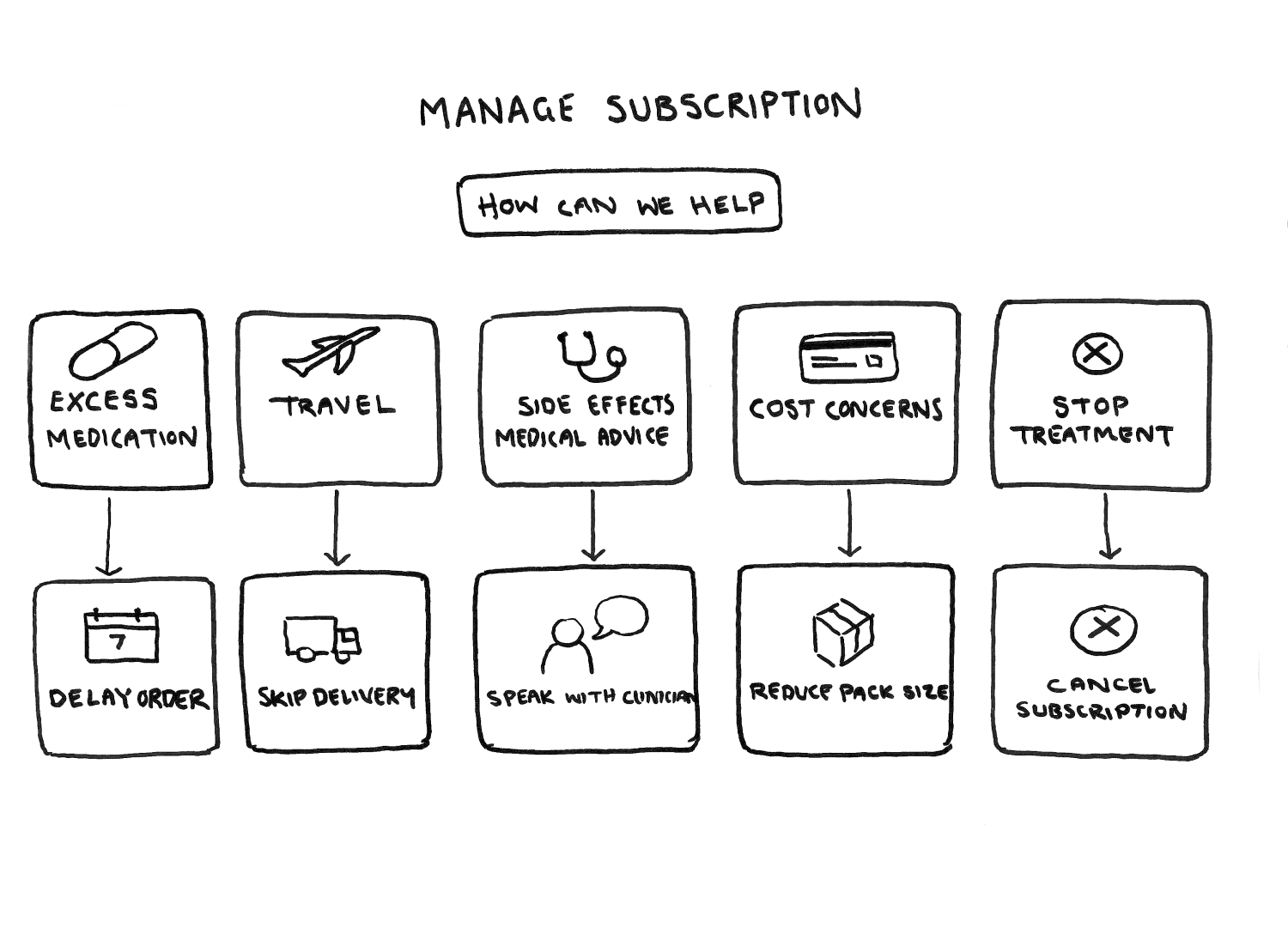
We also explored a self-service experience centred around patient intent. Patients would first tell us why they wanted to make a change. Their answer would then determine the most appropriate action, whether that meant delaying an order, reducing pack size, speaking to a clinician or cancelling their treatment.
Importantly, this approach also provided a scalable framework that could be adapted across multiple treatment categories, each with different clinical considerations and customer needs.
Although it required rethinking the subscription journey, this approach gave us a focused way to validate our hypothesis without expanding the project unnecessarily.
The solution.
The solution centred on a simple principle. Help patients solve their problem rather than forcing them into an unnecessary action.
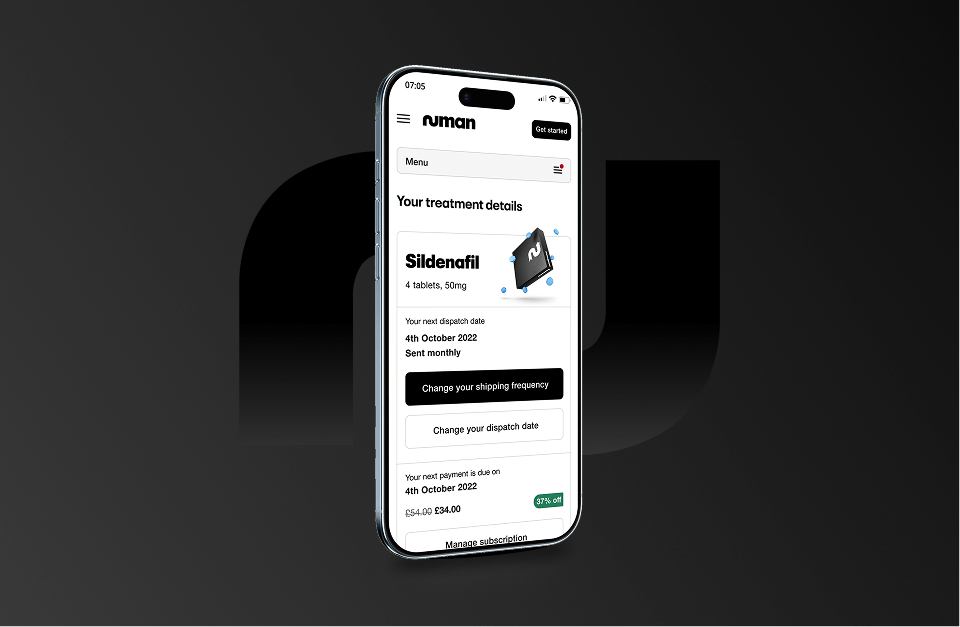
Instead of redesigning a cancellation journey, I created a dedicated subscription management hub that brought every key action into one place.
Patients could easily pause treatment, skip deliveries, change dispatch dates or cancel without navigating multiple journeys. Every action remained equally visible, reinforcing transparency and giving patients confidence that they remained in control.
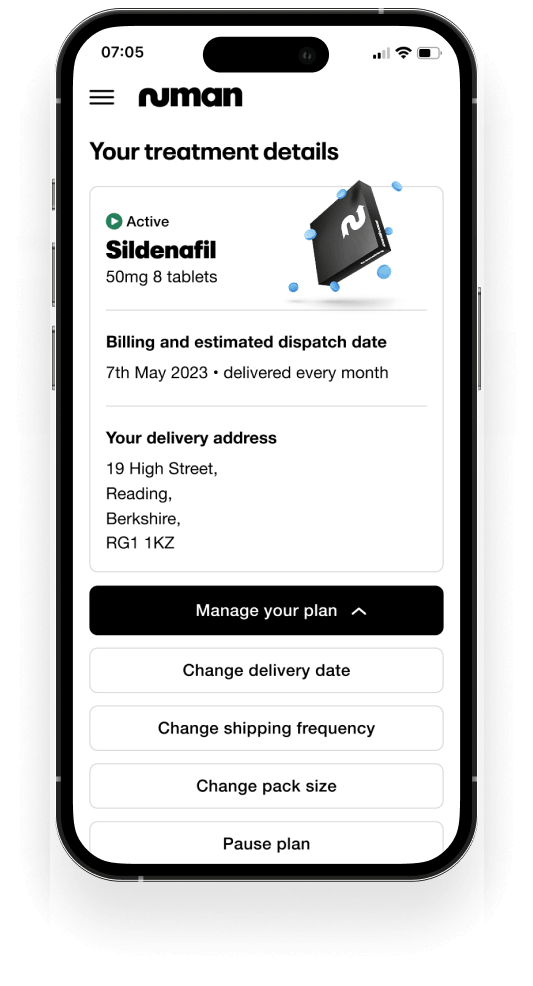
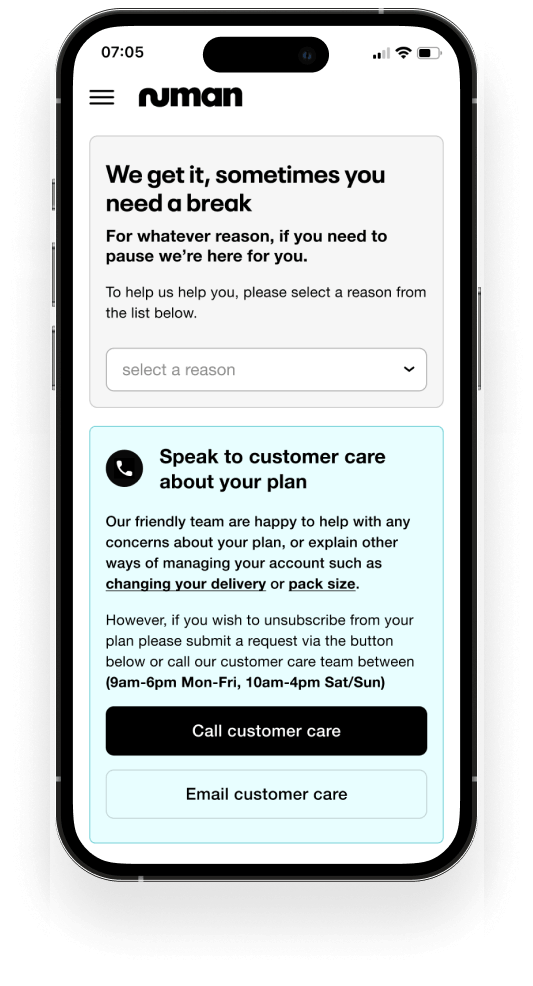
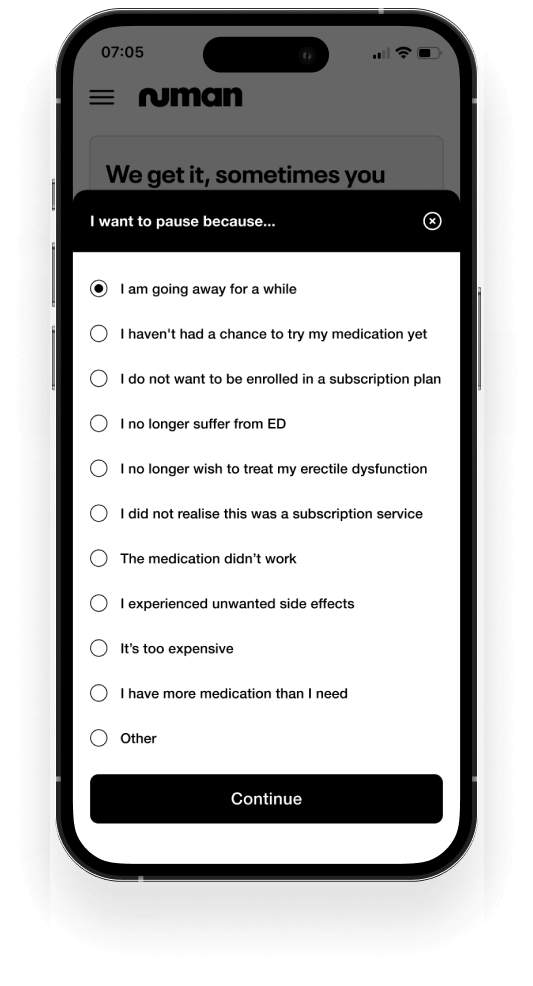
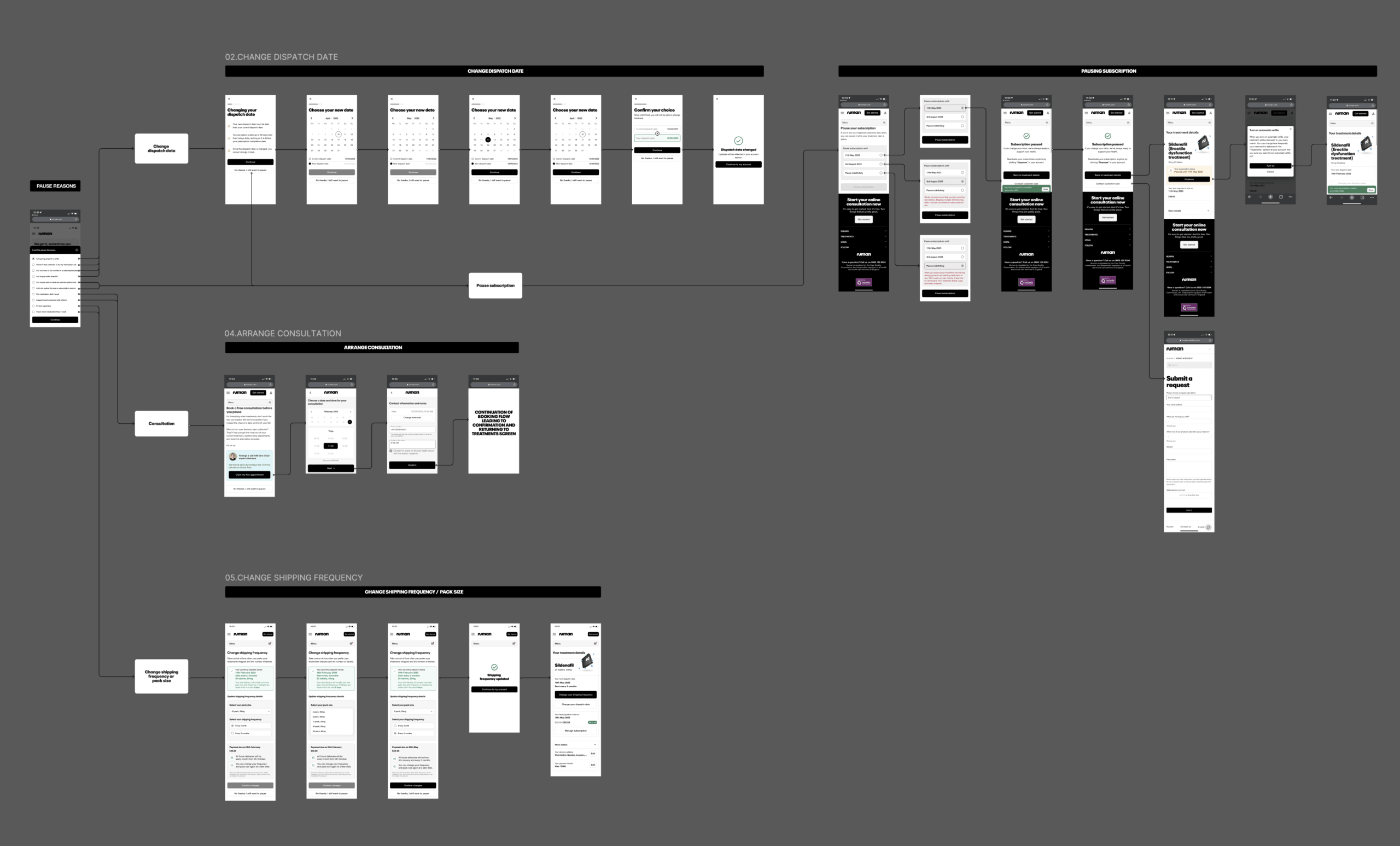
Patients who opted to take a break were asked why they wanted to pause their subscription. Their answer then determined the most appropriate next step.
- Someone with excess medication could delay their delivery or reduce their pack size
- Patients experiencing side effects were encouraged to book a free consultation
- Someone travelling away from home could postpone their shipment
- Patients who wished to stop treatment could cancel without unnecessary friction
Rather than encouraging patients to stay at all costs, the experience focused on helping them solve the problem that brought them there in the first place.
Key design decisions.
Because subscription management involved medication, every interaction needed to feel clear and reassuring.
Having spoken directly with patients, I wanted the experience to reduce uncertainty at moments where people were often anxious or frustrated. Subscription terminology was replaced with plain English, every management action was surfaced in one place instead of across multiple journeys, and cancellation was deliberately given the same prominence as every other option to reinforce transparency and trust.
Learning through experimentation.
Before committing to a full rollout, we validated the redesigned experience through a series of controlled experiments rather than relying on assumptions alone.
One area we wanted to better understand was Indefinite Pause, which already existed within the product. There was an ongoing debate about whether it genuinely helped patients manage their treatment or simply delayed inevitable cancellations. To answer that question, we temporarily removed the option for a subset of eligible patients.
The experiment quickly settled the debate. Cancellations increased by almost 40%, demonstrating that removing flexibility increased cancellations rather than encouraging continued treatment.
I refined the experience, reinstating Indefinite Pause alongside clearer subscription management options and direct access to Customer Care where appropriate. A second experiment showed that pause rates remained broadly unchanged, indicating patients weren't abusing the feature. At the same time, cancellations and refund requests both fell, which demonstrated that restoring flexibility didn't introduce the business risk some stakeholders had originally feared.
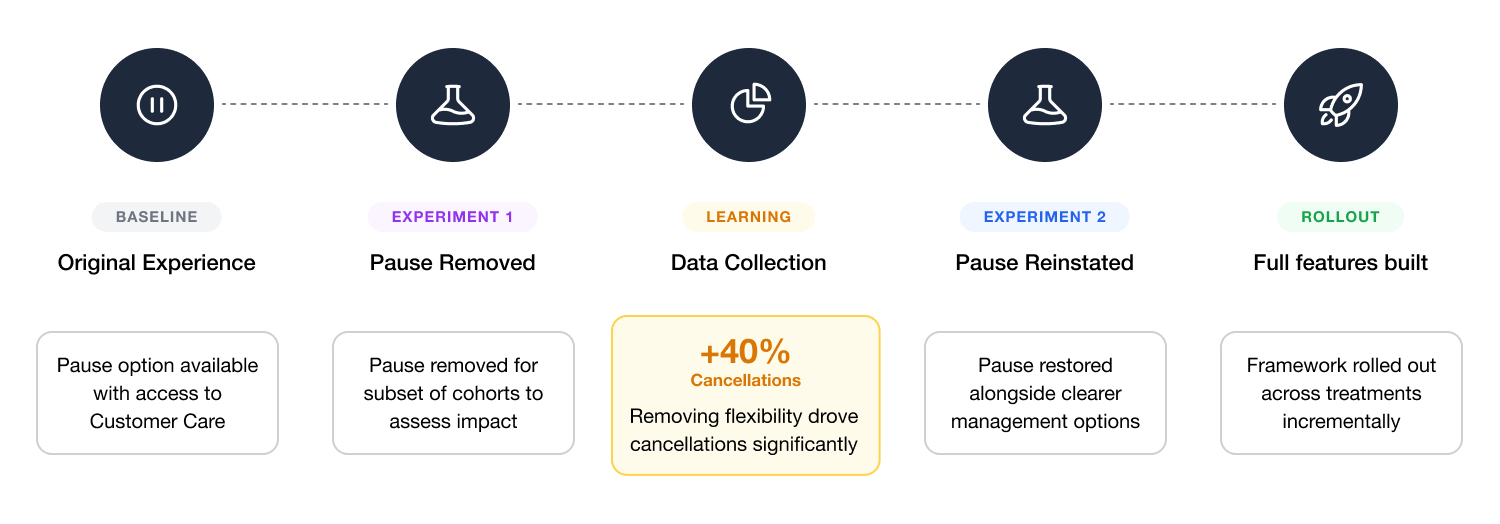
With confidence in the approach, we rolled the subscription management framework out incrementally across additional treatment categories, adapting the experience to the clinical needs of each while maintaining a consistent interaction model across the platform.
The experimentation fundamentally changed our understanding of retention. We learned that giving patients meaningful control over their subscription was more effective than restricting their options, a principle that shaped the final product and influenced future subscription experiences across the platform
Results.
- 30% reduction in subscription-related Customer Care calls.
- 15% of patients chose to modify their subscription rather than cancel.
- Estimated £20k increase in monthly recurring revenue through increased subscription modifications improved retention.
- Reduced refund requests and fewer distressed Customer Care interactions.
- Established a scalable subscription management framework that could be adapted across multiple treatment categories
The commercial outcome came as a by-product of a more honest experience. Once patients understood their options and could manage their subscription themselves, many chose to continue their treatment on terms that better suited their circumstances.
Next steps.
Beyond improving subscription management, the project established a reusable decision-making framework that could support treatment switching, dosage adjustments and other clinically supported journeys across the platform.
Rather than presenting every patient with the same set of actions, future iterations could combine treatment history, behaviour and clinical context to recommend the most appropriate path before a patient even reaches a decision.
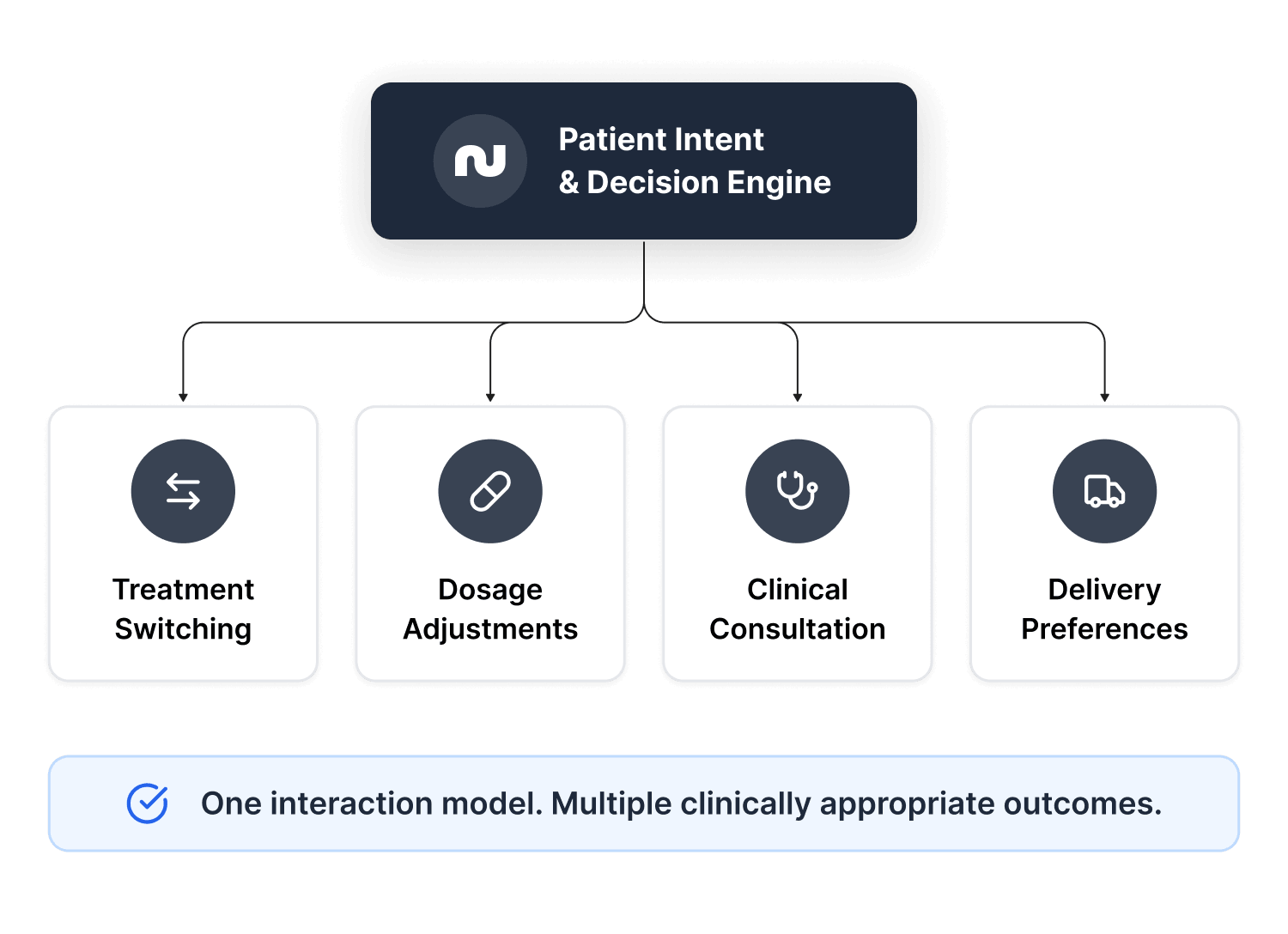
A patient who has been stockpiling medication for several months has very different needs from someone experiencing side effects for the first time. The long-term opportunity is a product that understands that context and proactively guides patients towards the most appropriate next step, creating a more tailored and clinically relevant experience
View more projects